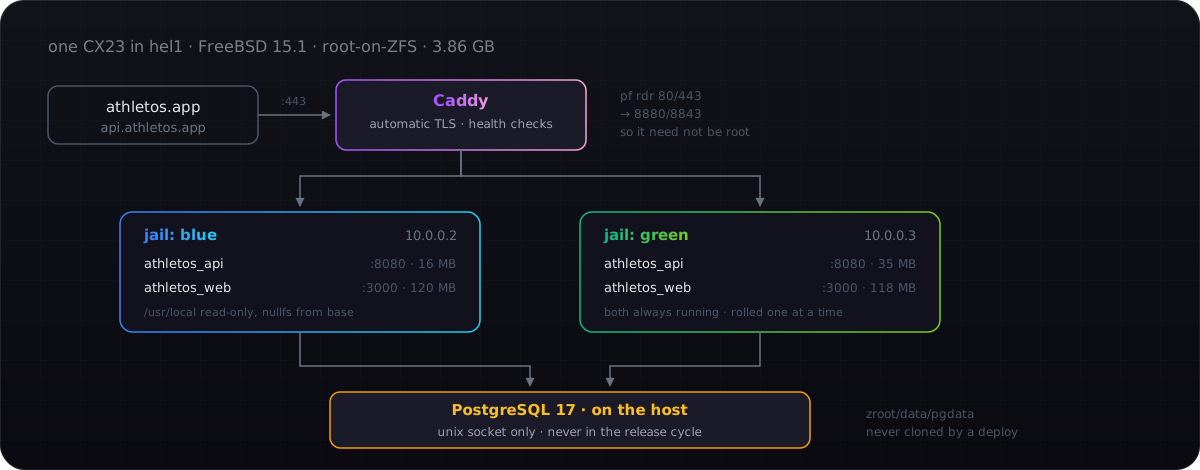
One box, two jails and a five second deploy
The essence is simple and efficient. That is exactly why I chose FreeBSD as the foundation and Rust as the base.
AthletOS picks a program, prescribes the weights, and records what you actually lifted next to what it asked for.
The gap between those two numbers is the entire product. I do not need a motivational chart, I need to be told 100 kg and not talk myself into 120.
One Hetzner CX23, about €7 a month. FreeBSD 15.1, root-on-ZFS, two jails, Caddy, Postgres.
Why not Docker
While Docker is great, well supported and convenient, it is also additional complexity and overhead that I do not need. With FreeBSD I have everything I need to ensure smooth rollouts and consistent performance with minimal overhead and tooling.
Rollouts
Two jails, blue and green, both running all the time and both registered with Caddy. A deploy takes one out, swaps a symlink, waits for it to answer, and only then touches the other.
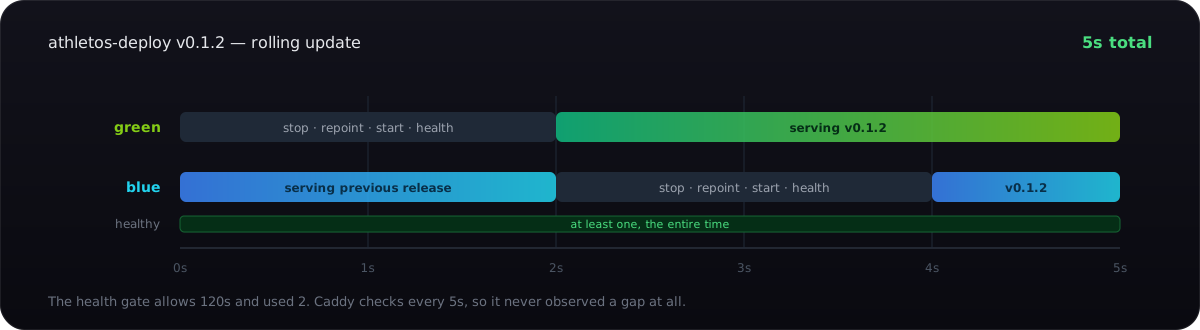
Five seconds, and never a moment without a healthy backend. The same machinery covers a crash at 3am: Caddy marks the jail down and the other one serves until I look.
Migrations
Two releases are briefly live against one database, so a migration has to be backward compatible with the one before it.
Certificates
Certificate lifetimes are dropping to 47 days, which turns renewal into eight chances a year for a hook to fail quietly. Caddy just does it. No certbot, no timer, nothing to forget.
{$APP_DOMAIN} {
	encode zstd gzip
	reverse_proxy 10.0.0.2:3000 10.0.0.3:3000 {
		lb_policy       least_conn
		health_uri      /login
		health_interval 5s
	}
}
Efficiency
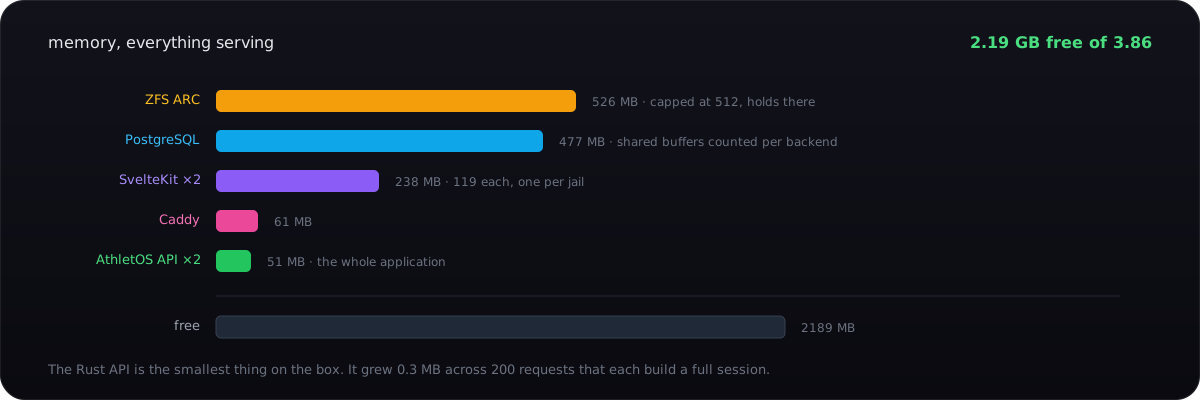
The efficiency speaks for itself. Plenty of room — likely more than I will ever need for this app.
The API answers in under a millisecond. Everything else in the numbers below is the distance to Helsinki and a fresh handshake per sample.
Backups
The backup story is refreshingly stable and efficient, with sanoid taking snapshots on a timer and syncoid piggybacking on ZFS to move them offsite. Jails ensure a reproducible and reliable runtime environment. There is little left for me to desire at this scale.
Was it worth it
Absolutely. Stable, reliable and predictable. I can trust this to keep running.
What broke on first contact
Five things broke on a real box. Four were ordinary. The fifth was worth
remembering: ${name}_user is a reserved rc.subr variable, and rc.subr
wraps your command in su -m before it runs. My rc script named a variable
athletos_api_user thinking it was mine, so daemon(8) was already running as
that user when it tried to drop privileges to that user. Two privilege drops
fighting, and -r retried it forever. The error it prints is “failed to set
user environment”, which sounds like login.conf and is not.
Building on the target
CI builds inside a FreeBSD VM and runs the test suite there before producing a binary. Rust is a Tier 2 platform on FreeBSD — the project builds it but does not test it — so building and testing on the release you actually deploy to is doing work nobody upstream does for you.
ARC eats your RAM
ARC takes half your RAM unless told otherwise. On a 4 GB box that is 2 GB it
does not need, and it shows up later looking like a database problem. Put
vfs.zfs.arc_max="512M" in loader.conf, on day one.
Raw HTML is available whenever an element is easier written directly:
Every number above was measured on the box, not estimated.